
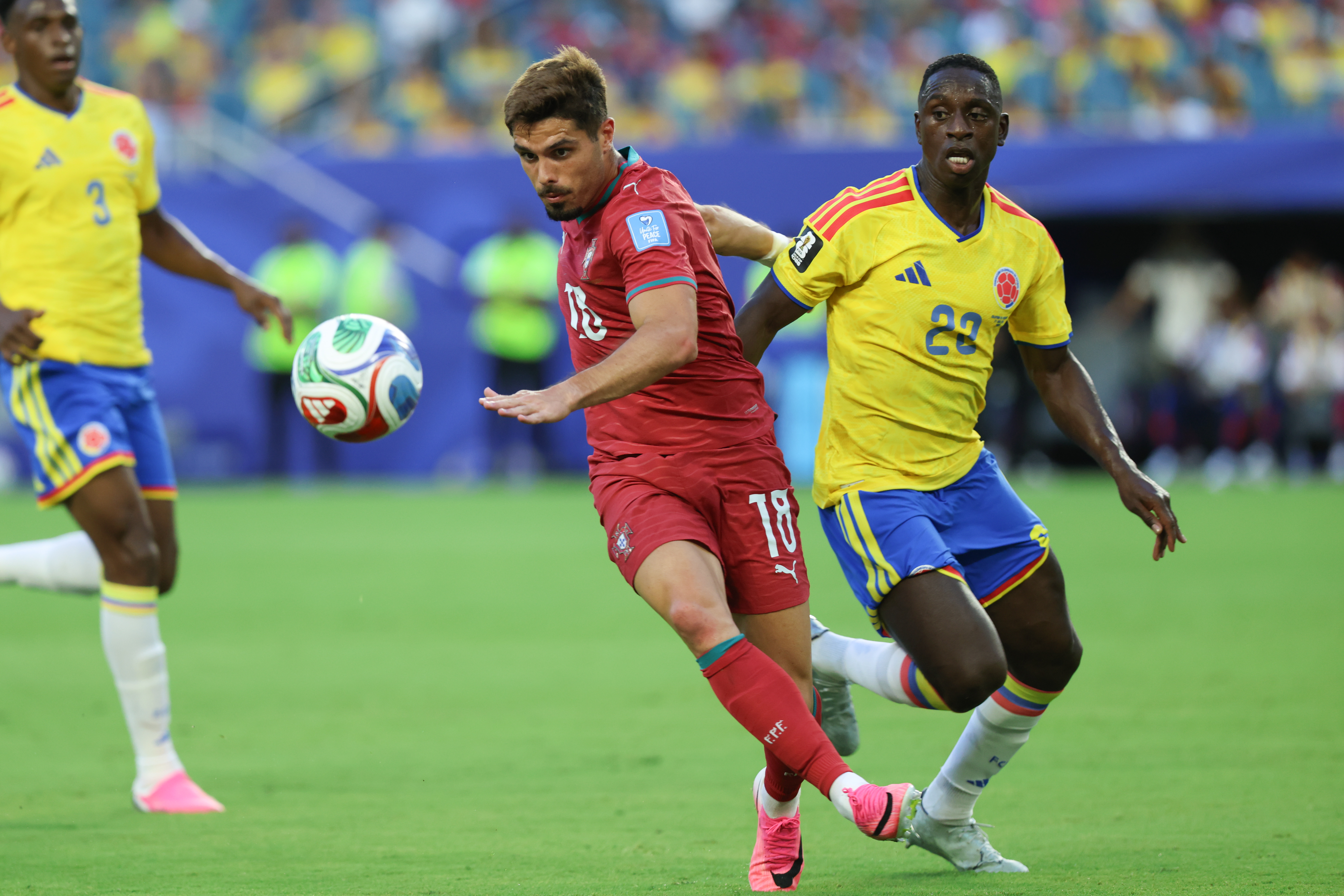
The atmosphere at Miami Stadium was absolutely electric, and you could feel it the second you walked in—the crowd made it feel like Colombia was playing a home game in their backyard. Colombia, entering this match as the clear favorites and group leaders, started with the “gung-ho” energy you’d expect, aiming to make their mark on the game early. On the flip side, you had Cristiano Ronaldo and his Portugal squad. Even though they’ve been scoring for fun lately—putting five past their last opponent—they stepped onto the pitch as the underdogs here, and they seemed totally content to let Colombia get their early chances while they sat back and absorbed the pressure.
The first half was a total tactical tug-of-war that ended 0–0, but don’t let the blank scoreboard fool you. It was a high-stakes, intense affair where both teams were desperate to break through, but neither could find the key to unlock the other.
Colombia looked the more dangerous side for long stretches. Luis Díaz and Jhon Arias were constantly buzzing around, giving Portugal’s backline real trouble with their movement and speed. Colombia’s cohesion was impressive, and they were transitioning fast, forcing Portugal’s keeper, Diogo Costa, to stay sharp. But for all that pressure, Colombia had a major weakness: they were falling apart in the final third. Whether it was a miscommunication or a pass that was just a hair off, they couldn’t turn all that possession into a real finish. Plus, they had a few defensive brain farts that almost let Portugal steal a goal on the counter, so they were living a little dangerously.
Then you have the Ronaldo factor. Honestly, it was a tough half for the legend. He spent most of it on an island, completely swallowed up by a disciplined Colombian defensive block. He was often stuck with his back to the goal, trying to hold up play, and when he did get a chance in the 30th minute, Camilo Vargas swallowed it up with ease. Portugal was trying to feed him, and Bruno Fernandes was doing his best to orchestrate, but the service just wasn’t landing.
Portugal’s weakness was their composure—or lack thereof. They weren’t getting rattled, which was a relief, but when the chances finally came, they were missing them. The perfect example was that gorgeous play in the 42nd minute where Vitinha and Pedro Neto linked up to set up João Félix. He tried this acrobatic scissors kick, but he sent it just over the bar. That was the game in a nutshell: Portugal was creating just enough to keep Colombia honest, but they lacked that killer instinct to actually punish them.
By the time the whistle blew for halftime, it was dead even. Both teams had traded momentum and had their moments of pure class and total frustration. It’s been a chess match so far, and honestly, the game is sitting right on a knife’s edge. It feels like whoever makes the first mistake or whoever finds that one bit of magic first will win.

If you were expecting a goal-fest in Miami, the second half of that Colombia vs. Portugal clash probably wasn’t what you had in mind, but man, was it a heater. It felt like a classic tactical chess match where neither side wanted to blink first.
Coming out of the tunnel, the dynamic shifted pretty fast. Colombia decided to slow their horses and sit back a bit, playing it cool and waiting for Portugal to make the first move. They were basically daring the Portuguese to create something, and for a while, it looked like a high-risk game of chicken. In the 58th minute, we finally saw the spark: a gorgeous bit of triangle-passing between João Cancelo and João Félix sliced right through the middle, setting Cristiano Ronaldo up for a massive 1v1 against Camilo Vargas. He put everything into it, but it just grazed past the post. He barely missed, and the collective gasp from the crowd was deafening.
After that scare, Colombia seemed to wake up and decided they’d had enough of soaking up pressure. They started pouring forward, and the game turned into a frantic, back-and-forth scramble. Renato Veiga turned into an absolute monster for Portugal, coming up big time to deny chance after chance and stopping Colombia’s momentum in its tracks.
Then, things got spicy. Around the 75th minute, Luis Díaz went dancing into the box and tangled up with António Silva. The ref pointed to the spot, the stadium erupted, and for a second, it looked like Colombia had the golden ticket. But then, the dreaded hand went to the ear. VAR took a long, painful look at the replay, and it turned out Díaz had actually clipped the defender’s foot before the contact. The ref trotted over to the monitor, shook his head, and waved it off. The ref canceled the penalty, and the Colombian side collectively groaned loud enough to be heard all the way back in Bogotá.
The drama just wouldn’t quit, though. In stoppage time, Davinson Sánchez thought he’d finally broken the deadlock with a header off a beautiful Juan Quintero cross. The place went wild, but the linesman’s flag killed the vibe immediately—offside by literal inches.
Colombia gets the point they needed to stay at the top of Group K, and Portugal moves on to face Croatia, leaving us all wondering if they’ve got more in the tank for the knockouts.
See you next week when we cover Argentina vs. Cape Verde.
Español
El ambiente en el Estadio de Miami fue electrizante; desde el inicio, la atmósfera sugería que Colombia disputaba un partido en condición de local, arropada por una afición volcada en las gradas. Colombia, que llegaba al encuentro como líder de grupo y gran favorita, comenzó con la intensidad característica de un equipo decidido a marcar el ritmo desde el primer minuto. Por el contrario, Portugal, a pesar de su reciente despliegue ofensivo —incluyendo cinco goles en su última presentación—, planteó un esquema más conservador, asumiendo el rol de equipo paciente que optó por ceder la iniciativa y absorber la presión colombiana.
La primera mitad se desarrolló como un intenso duelo táctico que concluyó sin goles. No obstante, el marcador no reflejó la alta competitividad del encuentro; ambos equipos mantuvieron una disputa cerrada, mostrando una notable determinación por romper la paridad, aunque sin la precisión necesaria en el último tercio del campo.
Colombia lució más incisiva durante gran parte del primer periodo. Luis Díaz y Jhon Arias generaron constantes dificultades a la zaga portuguesa gracias a su movilidad y verticalidad. La cohesión del conjunto colombiano les permitió transiciones rápidas que exigieron la máxima concentración del guardameta Diogo Costa. Sin embargo, Colombia evidenció carencias en la resolución de sus ataques; imprecisiones en el último pase impidieron capitalizar el dominio territorial. Además, algunos descuidos en la retaguardia expusieron al equipo a peligrosos contragolpes portugueses, reflejando un juego de alto riesgo.
En cuanto a la figura de Cristiano Ronaldo, su primera parte fue compleja. El atacante estuvo aislado, neutralizado por un bloque defensivo colombiano disciplinado. Limitado a recibir de espaldas al arco, su participación fue escasa, y cuando tuvo una oportunidad clara al minuto 30, Camilo Vargas resolvió con seguridad. Pese a los esfuerzos de Bruno Fernandes por orquestar el juego, la conexión con su referente ofensivo fue intermitente.
La debilidad de Portugal radicó en su falta de contundencia en los momentos críticos. Si bien mantuvieron la serenidad, desperdiciaron ocasiones claras; la más notable, una acrobática jugada de João Félix al minuto 42 tras una asociación entre Vitinha y Pedro Neto que terminó apenas por encima del travesaño. Fue la síntesis del encuentro: Portugal generó las oportunidades necesarias para incomodar, pero careció del instinto definitivo para capitalizar su dominio.
Al llegar al descanso, el marcador se mantenía en empate. El encuentro se consolidó como un ejercicio de estrategia donde el más mínimo margen de error o una genialidad individual podrían determinar el resultado.
La segunda mitad, aunque carente de goles, mantuvo la tensión de un ajedrez táctico de alto nivel. La dinámica cambió tras el descanso, con un planteamiento más conservador por parte de Colombia, que prefirió esperar y buscar los errores en la estructura portuguesa. El punto de inflexión llegó al minuto 58: una precisa triangulación entre João Cancelo y João Félix habilitó a Cristiano Ronaldo para un mano a mano frente a Camilo Vargas. El remate del portugués rozó el poste, provocando una reacción inmediata de la afición.
Tras este susto, Colombia recuperó la iniciativa ofensiva, lo que derivó en un juego de ida y vuelta. Renato Veiga se erigió como una pieza clave para Portugal, interviniendo con solvencia para neutralizar los avances colombianos.
La controversia apareció al minuto 75, cuando una acción en el área entre Luis Díaz y António Silva derivó en un penalti señalado inicialmente por el árbitro. Sin embargo, tras una exhaustiva revisión del VAR, se determinó que Díaz había contactado previamente el pie del defensor, anulándose la decisión. En el tiempo de compensación, Davinson Sánchez anotó un gol que fue invalidado por posición adelantada tras un centro de Juan Quintero, manteniendo la paridad definitiva.
Con este resultado, Colombia asegura el punto necesario para mantenerse en la cima del Grupo K, mientras que Portugal pone la mira en su próximo encuentro ante Croacia, dejando abierta la incógnita sobre su potencial en la fase eliminatoria.
La cobertura continuará la próxima semana con el análisis del encuentro entre Argentina y Cabo Verde.



Leave a Reply